
How to prepare for a development sector interview
You got an interview - congratulations! Now, I’m going to walk you through how to really prepare, to kick it to the curb, and even further.
Here’s what you need to know about development sector interviews.
The first thing to remember is that an interview is a two-way conversation. You’re not at the interviewer’s beck and call; they don’t have all the power. You made the shortlist because you have the skills and experience to do the job. You’re bringing a lot to the table, so be confident. The interview is, to quote Cher in Clueless, “a jumping off point to start negotiations.”
Secondly, interviews are a great opportunity to network. This is one-on-one time with some influential people in one of your target organisations. Yes, it’s timed and you have to answer their questions, but do a good job, and they will remember you. You’ve already passed the initial vetting of application and interview, so, if you don’t get that job, there’s always others.
Thirdly, always take up an interview offer. Maybe you’re not sure about the job or you’re got enough on your plate but do carve out some time. You never know where it will lead and a job is often more interesting when someone explains it, as opposed to reading a job description.
It’s also really good to learn how to pitch yourself on the spot. Not the most fun of gigs, but I promise, every interview makes you a better communicator.
Here’s how to get prepared.
1. Research the organisation and program
Aid and development organisations, whether large institutions like UNICEF or smaller NGOs, often have distinct missions, values, and operational structures. Explore the website to understand its vision, key focus areas, and history. Look into recent projects and read the executive summaries of annual reports. Check their social media for recent posts.
If the job is for a specific program, research it to bits. Know who the team lead is, the team structure, and recent media or events. After all, the role is communications; you’ll have to know this stuff to do the job. In particular:
Read any mid-term or end of project reviews. These are often done by an external source and can be a goldmine of what’s going right and what needs improvement
Do a quick review of the current website and drop in references to or ideas around it. They will love your initiative
Look up recent news articles or press releases for their latest initiatives or challenges
Try to speak to someone who works there for some inside goss on current challenges and then work it into one of your responses:
For example, say they’re struggling with slow approvals from a funding partner. You could say in the interview, “I think it’s important to have a strong relationship with the funding partner and to make them feel they’re part of the decision-making process. So, I schedule regular meetings and ask for and incorporate any feedback along the way.”
And they’ll think, wow, she’s a mind reader! This is exactly the approach we need to handle our funding partner.
2. Research the job
The job description is an outline for the interview, the questions you’ll be asked, and what’s important for new employees to know. The areas I zone in on are:
The duties/responsibilities section. This is what the interview questions are based on, with typically, the most important tasks at the beginning.
Knowledge and skills required. This section further down is about transferable skills, such as being a team player, good communicator, ability to work in a multicultural environment, etc. It’s good to be aware of these so you can drop them into your examples
Reference to funding partners like USAID, DFAT, World Bank etc. Typically, a funding partner is an important stakeholder, so this is a great opportunity to get onto their website and read any new policies or press releases about key focuses, new initiatives, etc. If you can show an understanding of their funder’s priorities and relate it back to this role, the interviewers will love it.
3. Prepare and PRACTICE examples/stories that demonstrate your skills
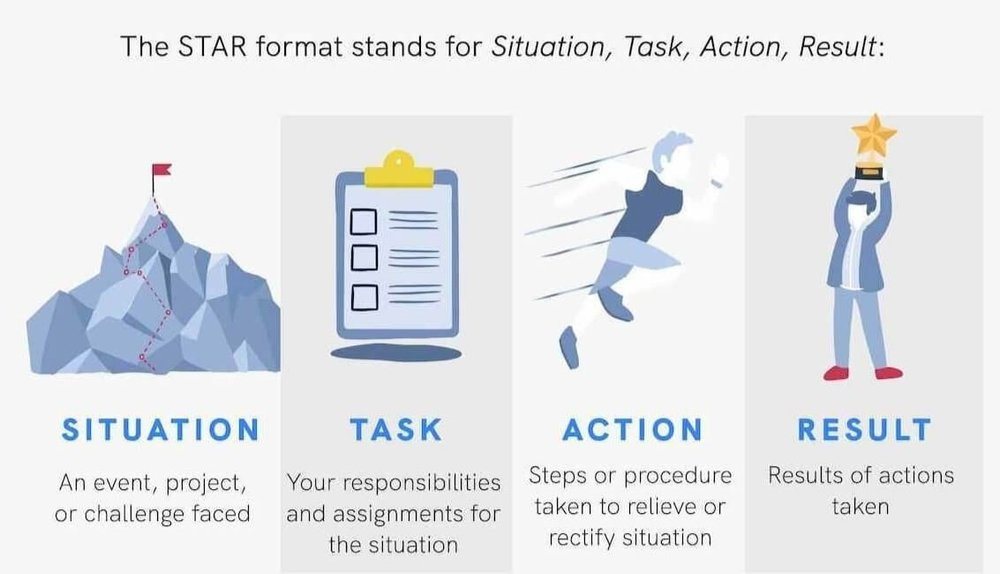
In an interview, it’s critical to provide concrete examples rather than general statements about your abilities. The STAR method (Situation, Task, Action, Result) is standard to structure your responses:
Situation: Set the scene briefly.
Task: Explain the challenge or responsibility you were facing.
Action: Describe what you did to address it.
Result: Share the outcome and any lessons learned.
Include as many career highlights as you can. They can usually be adapted to different scenarios.
If you’re new to the field, don’t worry. The good thing about comms is that it’s cross-sectoral. Writing a comms plan or social media strategy is a solid skill in any industry. You can then demonstrate development sector knowledge through your research of the organisation or project.
4. Be ready for behavioural and scenario-based questions
Behavioural questions ask about your past experiences, while scenario-based questions test how you’d handle specific situations. Some examples you might encounter include:
“Tell me about a time when you developed a public diplomacy campaign you’re particularly proud of.”
“How would you handle a situation where local partners have conflicting priorities?”
“What are some of the risks involved in building [organisation name]’s brand visibility?”
Practice your answers! Out loud, in front of the mirror, with a friend, or record them, whatever works for you.
5. Prepare an initial spiel about yourself and the job
95% of interviews will ask a version of this question, “Tell us about yourself and why you applied for this role.”
This is your opportunity to give an overview of your experience, skills and knowledge as relates to the job.
It’s also a chance to drop in some of your newly acquired info about the organisation, any issues or challenges they’re facing, and how you can hit the ground to deliver value from the get-go.
6. Demonstrate awareness (and implementation) of cultural sensitivity and cross-cutting issues
We all know that international development work requires a high level of cultural awareness and ethical integrity. Interviewers will want to know that you approach development work with humility and respect. Be prepared to discuss how you have navigated diversity and upheld the dignity of the communities you work with.
Emphasise any cross-cultural training, experiences in diverse teams, or language skills.
These days, it’s also important to reference cross-cutting issues like gender equality, disability and social inclusion (GEDSI) and climate change.
Even if you don’t get a specific question on these, any example or references to GEDSI and climate will be noted.

7. Prepare your own questions
Always ask one or two thoughtful questions at the end, time permitting. It shows genuine interest in the role and helps you better understand if the organisation is a good fit. Some ideas include:
“What are the organisation’s biggest current challenges, and how does this role contribute to addressing them?”
The money question below
(My personal favourite) “Can you tell me about the team culture from an insider perspective and how the organisation supports its staff?”
The reason I like ending with this one is that usually the interviewer starts raving about their organisation (if they don’t, there’s a big clue!), and it ends the interview on a positive note.
8. Know your pay range
Some jobs, like the UN or government agencies, advertise their rates upfront. Good on them. Most others don’t but trust me, they know exactly what the pay range is for a job.
It can be a tricky one to figure out the first time round but knowing this is important. And it’s very likely you will be asked about it at the interview.
Check similar jobs and ask around. Look at what you’re currently paid. While it is common to expect a 10-15% raise with a new role, it’s also a grey area, and often depends on the organisation. Expect that if you’re new to the agency, you’ll likely be on the bottom-mid end of the scale.
Typically, you may be asked for your daily rate (lump sum in USD, Euro or local currency) or an annual salary. Don’t forget to include superannuation, depending on where you live.
If the conversation doesn’t come up during the interview, you can ask about it at the end. There is absolutely nothing wrong with asking about the salary, especially for large organisations, they expect you to. We all need to eat and pay our bills.
Be confident and clear, though your language can show some flexibility and willingness to negotiate. For example, you could say something like this:
“My daily rate is X or for an annual salary, I’d be looking at about Y plus superannuation. I can be a little flexible depending on the scope but this is… in the range of what I’m currently paid OR … what I’m looking for.”
9. Dress professionally but appropriately for the sector
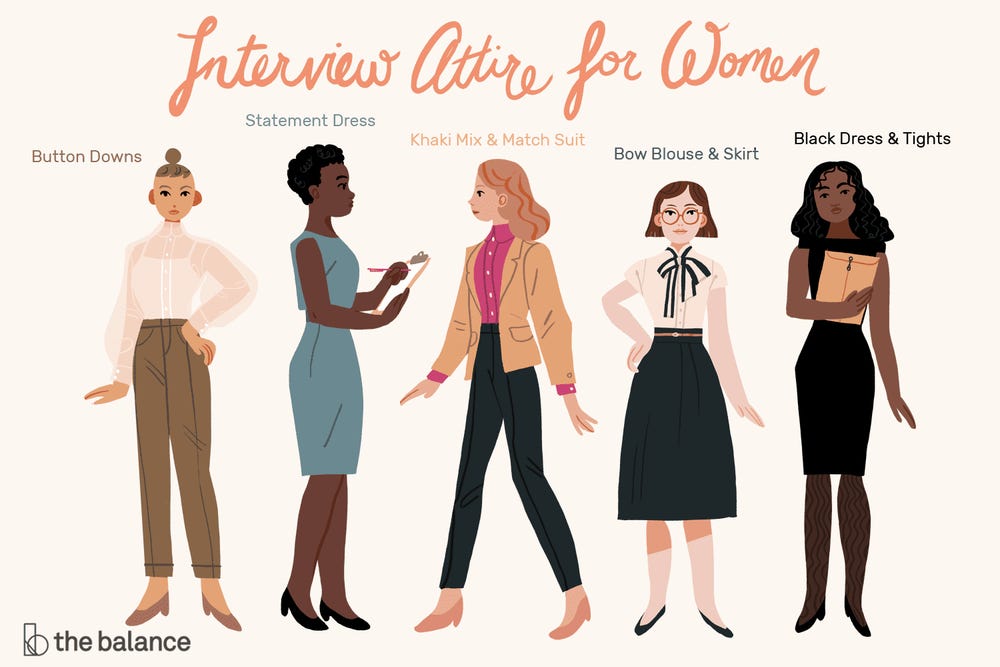
Dressing professionally is important but aid and development work is often more relaxed than a corporate setting.
Smart business casual attire works well. Online is unlikely to require a suit but in person, it may not go astray. Better to overdress than underdress. Definitely not jeans. Ever.
10. Manage your nerves and stay positive
Everyone gets nervous in interviews. This is a fact. I’ve been an interview scribe for the Australian government, and I could tell you some stories. From the top echelons to the lowly ranks, interviewing doesn’t come naturally to most people.
Interviewers know that. No one’s expecting an Oscar performance.
That’s not to say you can’t give one.
You can never be too prepared for an interview so research, practice, and practice some more. It’s the best way to feel confident.
If nerves do start to creep in, try some deep breathing exercises and remind yourself that it will all be over in less than an hour.
11. Don’t forget to smile!
This may seem like a no brainer but likeability is one of the key factors of employment rates. At least one of the interviewers, if not all, will be spending a significant amount of time with you if you get the job. So, show them that you’re human and personable, and smiling is a very easy way to do so.
It is also a great tactic for introverts, as many of us are. And if you feel you’ve stuffed up an answer, you can always pause, and give them a big smile. We’re all human, after all.
Enthusiasm and interest in the role also shows your personality and naturally, interviewers want someone to be enthused about the role. As communicators, we can always put a good spin on things so this works in our favour.
12. Record the interview
This is one of my hot tips. It is so useful to listen back (and possibly cringe) at your responses for future reference.
If you like, you can let them know you’re recording the interview to improve your own performance (they’ll probably be impressed).
You don’t need fancy software either, I just use QuickTime player to record audio. But do check that it works first!
13. Follow up
Some people recommend sending a brief thank you email after the interview. Personally, I don’t do this but I’m sure it doesn’t go astray as a gesture of professionalism.
But I do follow up if I haven’t heard anything a week after they said they’d inform me of the results.
Granted, most interview finalisations don’t go to schedule. There is almost always a delay of some sort. But it is perfectly acceptable to follow up.
And when you do, ask for feedback. This is crucial. Even if you think you were absolute rubbish and must slink into a corner and die, you may be surprised by what an interviewer says.
14. Keep everything on file
My final tip is to keep a desktop folder with cover letters you’re proud of, every application that won an interview, notes on your interviews, and recordings.
Typically, you’ll find yourself applying to the same organisations and this kind of info is so helpful.
Finally, you’ve got this! The more interviews you do, the better you get. Good luck!
Like this post? Consider buying me a coffee to say thanks. Your contribution helps me to keep this content free.
Want new jobs in your inbox every week? Join the Comms 4 Development newsletter for the best round up of development sector comms jobs, in developing countries only.
About the author: Lilani Goonesena is an Australian development communications specialist based in Phnom Penh, Cambodia, and the Director of LIGO Creative. LIGO delivers editing, strategy, content, grant writing, SEO copywriting, social media management, and branding for the development sector and government. Get in touch.